
Coach and founder of Safar Lifestyle Coaching
About me
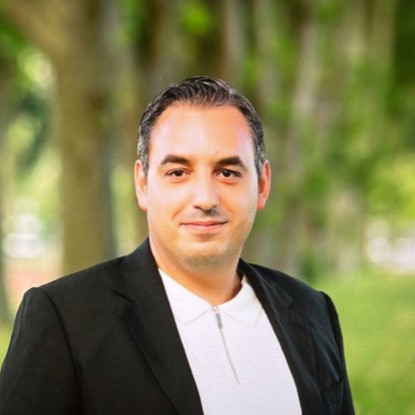
My name is Hicham Berkhli. I was born and raised in Eindhoven, in the Netherlands. I have a Dutch-Moroccan background, and that combination of cultures has shaped who I am, how I see people and how I approach my work. I am interested in the person behind the surface: not only in what someone does, but in how they became who they are, which experiences played a part in that, and what they need in order to move forward.
Looking back, I don’t see a carefully mapped-out plan. My path grew instead out of curiosity, doubt, unexpected turns and people who sometimes had more confidence in me than I had in myself at the time. Life simply cannot be fully planned. Sometimes you only understand why a step mattered after you have already taken it.
From football to psychology
How a boyhood dream eventually led to psychology
As a boy, I was mad about football. Like so many children, I dreamed of becoming a professional player. When it became clear that dream probably would not come true, I looked for another way to stay connected to that world. In the end, the commercial side of sport appealed to me far less than I had expected.
Through a series of open days, I discovered Applied Psychology. The courses on human behaviour, development and social issues caught my attention immediately. After my first year, I doubted whether university was really the right fit for me; a more practical, vocational path felt safer at the time. My father saw it differently. He felt I shouldn’t let uncertainty stop me from pursuing university, and encouraged me to aim as high as I could.
Looking back, I am grateful he did. I went on to study Clinical Psychology at Utrecht University and quickly found that it suited me far better than I had expected. I grew increasingly fascinated by human behaviour and discovered that psychology was broader and deeper than I had originally thought.
Curious about the person behind the behaviour
Not just what someone does, but why
What has always fascinated me most is the question of why people think, feel and act the way they do. Why does one person become anxious after a difficult experience, while another responds mainly with anger or withdrawal? Why does someone keep putting themselves last, even when it makes them unhappy? Why can someone understand, rationally, exactly what needs to change, yet still struggle to make that change happen emotionally? Questions like these have always held my attention.
I have learned that two people with a similar story can still carry very different backgrounds. Behind behaviour and habits can lie experiences of loss, fears, cultural expectations, family patterns, questions about self-worth or difficult experiences. That is why I prefer not to focus on one isolated difficulty, but on the whole person in front of me.
My Dutch-Moroccan background has made me especially aware of the influence of culture and identity. Behaviour that seems unusual from one cultural perspective can be entirely understandable from another. To me, cultural understanding does not mean explaining everything away through culture; it means being willing to ask questions before drawing conclusions.
Understanding as the basis for change
Why insight is often the first step
My perspective is strongly psychodynamic: I pay close attention to underlying emotions, patterns, and the way people have learned to see themselves and others over the course of their lives. Many reactions that feel awkward or painful today were often, at some earlier point, an understandable way of coping with difficult circumstances.
Someone who always tries to appear strong may have learned that there was little room for vulnerability. Someone who avoids conflict may have experienced disagreement as unsafe. Patterns like these rarely disappear simply because someone is told they should think or act differently.
For me, change usually begins with genuinely understanding: not only intellectually, but recognising what is actually happening inside. I try to help make visible together with someone what previously stayed out of view, by naming a pattern I notice, or asking a question that reveals a connection between the present and earlier experiences. My observations are never the absolute truth — there must always be room to say that something doesn’t fit or feels different. As a pattern becomes more conscious, room for choice opens up, and you no longer have to react automatically the way you always have.
Patience, attention and humour
Development rarely moves in a straight line
Some patterns have developed over decades. It isn’t realistic to expect everything to resolve after a few conversations. Development also rarely moves in a straight line: sometimes someone takes major steps forward, only to experience what feels like a temporary setback afterwards. That does not mean anything has failed.
I take the long view and enjoy continuing to explore, even when change isn’t immediately visible. At the same time, I think it’s important to keep looking critically: do we understand the situation well, does this approach still fit, and might we be missing something? To me, patience isn’t passive waiting — it’s staying engaged.
Alongside attention and depth, I value humour. Conversations don’t need to be heavy all the time. A light remark can ease tension and create space to discuss something that previously felt too loaded — without ever coming at the expense of someone’s story. People are more than their problems, and a conversation doesn’t have to be a place where all liveliness disappears.
My professional background
Years of experience in Dutch mental healthcare
I trained and am professionally registered in the Netherlands as a psychotherapist and Dutch-registered healthcare psychologist. I worked for more than seventeen years across different organisations and clinical settings within Dutch mental healthcare, including intercultural mental healthcare, and later became a co-founder of InterGGZ in Amsterdam.
Over the years, I trained in a range of therapeutic approaches, including cognitive behavioural therapy, EMDR, schema therapy, client-centred therapy and psychodynamic approaches. I don’t see these as competing camps in which one method is always the best; each approach illuminates a different part of the person and of the change process, and the strongest approach usually comes from listening carefully and weaving different insights together thoughtfully.
These qualifications, registrations and years of experience form my professional background. Through Safar Lifestyle Coaching, however, I work exclusively as a coach; I do not provide psychotherapy, psychological diagnosis or medical treatment. I do, however, bring the way of looking at people that I have developed over all these years into my coaching.
Why I started coaching
After emigrating, I felt the wish to build something new
After we emigrated, I found I wanted to build something of my own again. Coaching gave me a way to work with people differently: focused on development, choices, direction and making the most of what is possible.
Not everyone who feels stuck is struggling for the same reason. People can find it difficult to set boundaries, struggle with perfectionism, face an important decision, navigate cultural expectations, or move through a new stage of life. They can be functioning well and still feel they are falling short of their own potential, or keep running into the same obstacle.
Within coaching, I draw on my psychological knowledge and psychodynamic perspective to help people recognise patterns, understand their emotions more clearly, and take concrete steps from there. I think it matters that coaching isn’t only about motivational statements. Genuine development sometimes calls for honest questions and self-reflection too — with the aim that someone can ultimately move forward more independently, with greater confidence in their own thinking and ability to act.
Everyone has their own path
Why the name Safar fits
The word safar means journey. That meaning fits my own life story, and the way I look at personal development. A person’s life rarely unfolds exactly according to the original plan.
My own journey began with a love of football, led through Applied Psychology to university, developed into training as a Dutch-registered healthcare psychologist and psychotherapist. Many of the important steps along the way didn’t begin with certainty, but with doubt. Sometimes I only discovered along the way that a direction didn’t suit me. Sometimes I needed someone to challenge me to get more out of myself.
I carry that experience into my coaching. I don’t believe there is one route that suits everyone. Every person has their own background, pace and destination. My role isn’t to decide for someone else which path they should take, but to help them understand where they stand, what possibilities exist, and which next step genuinely fits.
Would you like to get in touch?
I hope this gives you a genuine sense of who I am and how I look at people and change. If you’d like to know more about what coaching looks like, or would simply like to get acquainted, you are very welcome.